Winter Road Freight to Russia and the Caucasus: Routes, Risks and a Planning Guide
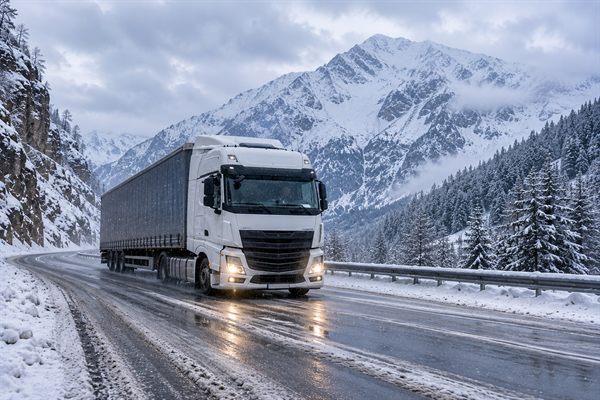
For road freight from Türkiye to Russia, Georgia and Azerbaijan, the hardest time of the year runs from November to March. The roads stay open and trucks keep moving, but heavy snow, ice, mountain pass restrictions and border queues can add several days to delivery times.
A successful winter shipment depends on more than finding the right truck. It takes the right route, an alternative agreed in advance, complete documents and daily operational tracking. In this article we explain what can go wrong in the winter months and how to plan your cargo around it.
What Changes in Winter?
A route that runs smoothly in summer slows down in winter for these reasons:
- Mountain passes: Roads across the Caucasus run at high altitude. When heavy snow or avalanche risk hits, they can be closed to heavy vehicles for hours or even days, or restricted to certain vehicle classes.
- Border queues: When a pass closes, trucks pile up at the border and along the road. Once it reopens, the queue takes time to clear.
- Low temperatures: Freeze-sensitive goods need suitable vehicles and temperature control.
- Driving conditions: Icy roads, short daylight and mandatory rest periods reduce the distance covered each day.
Which Routes Are Affected?
Via Georgia to Russia: Upper Lars
Upper Lars (Verkhny Lars) is the only operating road border crossing between Georgia and Russia. The road crosses the Jvari Pass between Gudauri and Kobi, at the foot of Mount Kazbek. In winter this section is frequently closed to heavy vehicles because of snow, ice and avalanche danger; a closure can last a few hours or several days.
This affects not only cargo bound for Russia but also transit shipments continuing through Russia to other countries. Planning on the Georgian route should therefore include a margin for possible waiting, not just the normal transit time.
Via Azerbaijan to Russia: Samur – Yarag-Kazmalyar
Following the Caspian coast, this route does not cross a high mountain pass, so it is usually more predictable in winter. On the other hand, the distance is longer and the border can get congested. It is the main alternative when Upper Lars is closed. We explained how this route is used against Black Sea risks in our article Shipping to Russia as Black Sea Risk Rises.
Azerbaijan is also a key transit point for shipments linked to the Caspian region and Central Asia. In both directions, transit permits and the current regulations of each country should be checked before loading.
Türkiye–Georgia crossing: Sarp
Sarp lies on the coast, so it does not close because of snow. But when the road on the Caucasus side is closed, trucks can back up here as well. High passes in the Eastern Black Sea region and Eastern Anatolia can also slow traffic in winter.
Central Asia transit: Gürbulak (Iran)
A large share of road cargo bound for Turkmenistan, Uzbekistan and Kazakhstan passes through Iran via the Gürbulak border crossing. Located on the high plateau of Eastern Anatolia, Gürbulak is one of Türkiye's busiest crossings all year round; in winter, snow, blizzards and ice add to the congestion and truck queues grow longer. For cargo heading to Central Asia, waiting time at the crossing should be built into the transit plan from the start.
Precautions by Cargo Type
Freeze-sensitive goods: Food, beverages, liquids, chemicals, paint, pharmaceuticals and some industrial raw materials can be damaged by low temperatures. Report temperature requirements before the loading date; if needed, a reefer or insulated vehicle should be planned.
Packaging and securing: Humidity and condensation rise in winter, and icy roads increase the risk of sudden braking and jolts. Use stretch film and pallet covers for cartons and desiccants for metal goods, and secure the load properly inside the vehicle.
Vehicle equipment: Winter-appropriate tyres, snow chains and the required safety equipment are essential on Caucasus passes. The vehicle should be technically checked before departure.
Documents: The CMR, commercial invoice, packing list, certificate of origin, transit documents and any product-specific permits must be complete. If a truck that has waited in a queue for days is turned back over a document error, winter doubles the loss. For details, see our article on customs and document processes.
Planning Tips
- Build in a time buffer. On winter trips towards the Caucasus and Russia, adding a few days to the summer transit time is realistic.
- Account for the New Year rush. From mid-December, congestion builds at borders and customs, and the New Year holidays in Russia also affect deliveries. Load critical orders early.
- Agree on the alternative route upfront. Before shipping, clarify whether your cargo can go via Azerbaijan if Upper Lars closes.
- Rethink FTL versus LTL. For urgent cargo, a full truckload (FTL) reduces the risk of waiting; for small, non-urgent lots, groupage (LTL) lowers the cost.
- Consider interim storage. Holding part of your non-urgent cargo at a suitable point until the road reopens can be cheaper than waiting in a queue. Our storage services give you that flexibility.
- Stay informed. Pass conditions can change within a day. Ask your carrier for regular location and status updates.
Winter-Ready Transport with ASR Trans Lojistik
ASR Trans Lojistik works with a team that deals with winter conditions on the Russia and Caucasus routes every year. We track pass conditions daily, reroute cargo via Azerbaijan instead of Georgia when needed, and keep our customers informed throughout the process.
Our solutions for shipments from Türkiye to Russia, Georgia, Azerbaijan and Central Asia:
- International full truckload (FTL) and groupage (LTL) road freight
- Project and out-of-gauge cargo transport
- Special equipment and temperature-controlled transport tailored to the cargo
- Transit transport and multi-country logistics solutions
- Coordination of storage, transshipment and customs processes
Under the ASR Group umbrella, we also provide product sourcing and international trade support to customers who need it.
Winter conditions change and routes shift. What matters is a logistics plan prepared for these variables in advance.
To plan your winter shipments together, visit our road transport page or get in touch with us.